44 results found with an empty search
- Clienteling in Jewelry Sales: How to Build Real Relationships That Grow Your Store for Years
Clienteling is one of the most misunderstood concepts in the jewelry industry. Ask most jewelers, and they’ll say: “My team needs to do more clienteling.” “How do I get my staff to follow up?” “Why don’t my associates build relationships?” “How do I teach clienteling?” But the real issue is far deeper — and your file nails it from the very first line: “I want to take a completely reverse approach… and talk first about the customers walking through the door.” Clienteling is not about sending more messages.It ’s not about pushing promotions.It ’s not about forcing associates to follow up. Clienteling is relationship-building — and relationships require three things: ✔ Exposure ✔ Contact ✔ Continued access Most stores don’t realize they are accidentally limiting all three. This post breaks down exactly how clienteling really works — and why many stores struggle without even knowing it. ⭐ The Real Goal of Clienteling Your file makes this extremely clear: “Why do businesses want clienteling to take place? Realistically, it’s to sell more.” There are only two ways to increase jewelry sales: 1. More customers 2. Higher ticket sales to existing customers Clienteling does BOTH. It grows your network, and it deepens the value of every relationship inside that network. But most stores approach clienteling from the wrong angle — they see it as a task rather than a growth strategy. ⭐ Clienteling = Exposure to the Right People William’s analogy in your transcript is brilliant: Why a salesperson in high school doesn’t meet jewelry buyers Because their environment doesn’t include them. “You’re able to clientele and build relationships with the people you’re exposed to in the environment that you’re around.” Associates can ONLY build relationships with: people they meet people they’re introduced to people they’re allowed to talk to people their environment includes This means: If your store does NOT expose associates to high-end clients… they will NEVER clientele high-end clients. You can’t relationship-build with people you never meet. ⭐ The Store Environment Controls Clienteling Success Let’s zoom in on your analogy: A person inside a high-end environment meets high-end clients. A person inside a low-end environment meets low-end clients. And if a sales associate only works with walk-in repairs or low-ticket customers, what do they become? A low-ticket associate. Not because of skill.But because of exposure limitations . Your file explains this clearly: “If we spend all of our time over here with low-end people, we’re not going to create the same amount of sales volume.” This is the #1 reason many stores rarely produce million-dollar writers. They never give associates access to million-dollar clients. ⭐ Business Owners Accidentally Block Clienteling This section of your transcript is one of the most important insights in retail: Many managers are afraid to let associates talk to high-end clients.They don’t introduce them.They don’t allow exposure.They’re scared of losing the associate AND the client. So what happens instead? The manager hoards the highest-end clients The team only interacts with low-end traffic No one gets exposure No one grows No one builds a luxury clientele No one becomes a top-tier seller This fear is the very thing preventing stores from growing. And the file calls it out powerfully: “How many high-end clients are you losing because you're not allowing exposure to take place?” ⭐ Clienteling Requires Contact (Not Just CRM Messages) Clienteling isn’t: automated text messages cookie-cutter follow-ups basic “Hey, how are you doing?” messages appointment reminders repair notifications Those keep you in touch.They do NOT build relationships. Your file explains the core truth: “High-end clients are not going to be okay with just text messages…They must have the ability to build a personal relationship the same way they would with a friend.” That means clienteling must include: ✔ Personal introductions ✔ Real conversations ✔ Invitations to events ✔ Private appointments ✔ Personal contact information ✔ Social interactions ✔ Trust This is why the best salespeople routinely: go to dinners go to charity events go to local galas attend fundraisers attend fashion functions get involved in community groups spend time with clients outside the store That is REAL clienteling. ⭐ The Fear of “Losing the Client” Creates a Much Bigger Loss Your file highlights a painful truth: If you don’t allow associates to build relationships with high-end clients,they will build relationships with low-end clients instead. And what happens? Low-end clients bring low-end referrals Clienteling becomes a low-value activity Sales stay flat Associates never grow The network never expands Meanwhile, the owner is thinking: “Why isn’t my team clienteling?”“Why does no one sell big?”“Why don’t we attract luxury buyers?” The answer is simple: You can't plant seeds in the wrong field and expect luxury fruit. ⭐ Top-Performing Stores Allow Their Salespeople to Build a Business Within Their Business Your transcript captures this beautifully: “You are allowing these people to create a business within your business.” This is the heart of clienteling. Your top team members should: have their own book have their own relationships build their own network create their own momentum develop their own sphere of influence The more relationships each associate builds, the more exponential the store grows. As your file explains: “How many people can three people know?How many can five people know?Your business grows exponentially.” This is how million-dollar salespeople are made. ⭐ Clienteling Has a Hard Limit — Use It Wisely An associate can only maintain a limited number of deep relationships (usually 5–10 at a time). So ask yourself: Do you want those 5–10 relationships with low-end buyers…or with high-end luxury collectors? Because your store is training one of those outcomes — whether intentionally or accidentally. ⭐ Final Takeaway: Clienteling Is NOT a Task — It’s an Ecosystem Clienteling requires: ✔ Exposure ✔ Contact ✔ Continued access ✔ Trust ✔ Relationship-building ✔ Culture ✔ Permission from leadership Your store must allow — and encourage — relationships to grow. If not, you will never build the client base you want. ⭐ JewelLink Helps Stores Build a REAL Clienteling Culture The JewelLink CRM + Academy system gives you: Customer messaging Customer portals Clean follow-up Appointment tracking Event tools Client categorization Daily clienteling workflows Sales training on relationship building Personality traits evaluation AI customer practice But more importantly: JewelLink helps store owners create a culture where relationships — not transactions — drive the business.
- Training Great Salespeople: Why the Sink-or-Swim Method Fails in Jewelry Retail
By William Jones Training great salespeople is one of the hardest — and most misunderstood — challenges in the jewelry industry. Most stores are filled with good people who never reach their potential, not because they lack talent, but because they were trained in an outdated system that sets them up to struggle from day one. I’ve spent years running multiple retail locations in our family business, building Jewelry Sales Academy, creating JewelLink and CountRetail, and watching thousands of sales associates develop in real time. What I’ve learned is simple: **Great salespeople are not “found.” They are built — intentionally, strategically, and with structure.** And nothing destroys that process faster than the classic jewelry-industry mistake: The Sink-or-Swim Method Every store knows this method: You hire someone new You tell them “selling jewelry is great, you can make a lot of money” You throw them at the front door You tell them, “Go sell. Good luck.” This is the system I grew up watching for decades. It’s also the system that ruins more promising sales careers than anything else in our industry. Why New Hires Struggle: The Math Is Against Them When you throw a new associate onto the sales floor unprepared, three things are guaranteed: 1. They have a low average ticket New hires haven't developed confidence, exposure, or product familiarity yet. 2. They have a low closing percentage New customers are the hardest for ANY associate to close — and new hires only get new customers. 3. They must meet MORE people than everyone else just to survive Low closing × low average ticket = high volume pressure. So what do they do? They try to save themselves. They pull the only levers they think they have: showing lower-priced items discounting rushing presentations avoiding team selling hunting for “easy” sales This teaches them all the wrong habits — habits that stick. And when they fail, owners say: “They just weren’t cut out for sales.” But that's not true.They were never given an environment where they could win. What Great Salespeople Actually Look Like A high-performing jewelry associate — someone with 3–5+ years of experience in your store — looks VERY different: High average ticket High closing percentage Strong client relationships Confidence presenting expensive items Less dependence on door traffic Deep knowledge of bridal, diamonds, fashion, and product flow But here’s the key: **This success doesn’t come from talent. It comes from access.** Great salespeople spend most of their time with existing customers , not walk-ins. They sell to people who already trust them. They have a book of business. They’ve seen big transactions happen over and over — which resets their expectations of what’s “normal.” That exposure is what builds confidence. The Problem: New Hires Don’t Get Access to Existing Customers This is the fatal flaw of the sink-or-swim model: New associates ONLY work with the hardest customers. No relationships No loyalty No shared history No trust No post-sale service reputation No familiarity with the brand And you expect them to close?At volume?With high tickets? It’s unrealistic. And if you look at your own data, you’ll see something shocking: 25–60% of your store’s annual revenue comes from your Top 100 customers. Yet your newest, least capable associate gets zero exposure to them. That’s backwards. What Really Happens When You Force New Hires to Work the Door Most owners think: “They need to get experience.” But what actually happens is: They get overwhelmed They learn to sell cheap They learn to discount They avoid team selling They never develop confidence They burn out They quit within 12 months This isn’t onboarding.This is survival. And survival never leads to excellence. A Better Approach: Pairing New Associates With Your Best Sellers If you want a new hire to become a high-performing salesperson, the formula is simple: Expose them to what you want them to become. That means: ✔ Team selling ✔ Shadowing A-players ✔ Working together on door traffic ✔ Watching how great sellers present diamonds ✔ Seeing 3ct rings, tennis bracelets, upgrades, and bridal ✔ Helping with existing clients ✔ Learning follow-up structure ✔ Writing thank-you notes ✔ Handling repairs and callbacks ✔ Building habits, not chasing transactions When new associates see high-ticket selling done correctly, their expectations shift. It’s the “four-minute mile principle.” People thought a 4-minute mile was impossible — until Roger Bannister did it.Then, within weeks, dozens of runners broke it too. Why? Because someone showed them it was possible. Jewelry sales works the same way. January Is the BEST Time to Train Every year after the holidays: associates are relaxed bonuses have been paid returns are slowing them down traffic is lower training time is higher mental space is better bad habits can be reset good habits can be installed This is the moment for: pairing A-players with B/C players giving new hires customer call lists assigning thank-you notes running bridal drills practicing AI customer role-plays in JewelLink reviewing closing techniques correcting floor flow issues Small improvements in January turn into massive results by December. The Truth: Training Happens Through Exposure, Not Instructions You can’t train confidence with a manual.You can’t train big-ticket selling with a worksheet.You can’t train luxury experience through scripts. Training happens when a new hire WATCHES a professional do the job. They must see: how a diamond is presented how the transition to price is handled how objections are removed how emotion is built how a $20,000 sale looks from start to finish If they never see it, they’ll never believe it. If they never believe it, they’ll never attempt it. If they never attempt it, they’ll never become it. The Bottom Line If you throw new hires into a sink-or-swim environment, you get: low tickets low closing frustration burnout turnover If you instead: pair them with A-players give them customer lists teach follow-up show them big sales give them access to existing clients build structure delay full door responsibility …you get high-performing, long-term, loyal salespeople. Training isn’t about pressure.It ’s about exposure, structure, and modeling excellence. This is how you build the next generation of top-tier jewelry professionals. If you need help training your team, developing onboarding plans, or structuring roles, you can find full courses, tools, and systems inside JewelLink and the Jewelry Sales Academy.
- Hiring for a Purpose: Why Clear Job Descriptions Are the Foundation of Every Successful Jewelry Store Hire
Most jewelry stores hire backwards.They start with urgency , not clarity : “We need a salesperson — now.” “We just lost someone — we need a replacement.” “Traffic is up — grab whoever we can.” And because hiring is reactive instead of strategic, jewelers often bring on people they like , rather than people who are truly aligned with the business needs. But your uploaded file hits the core truth: “You can’t hire for a purpose unless you know what that purpose is — and can clearly tell someone what to expect.” This is why job descriptions aren’t paperwork — they’re strategy. ⭐ The Problem in Jewelry Retail: We Try to “Sell” the Job Instead of Define It Because jewelry stores are busy and hiring feels urgent, owners often: Skip writing a job description Avoid defining the role clearly Don’t outline responsibilities Downplay expectations in interviews Focus on getting someone hired instead of getting the RIGHT someone hired Then what happens? Three months later: The new hire is overwhelmed The manager is frustrated Expectations weren’t aligned The employee leaves The cycle starts all over again Your transcript describes this perfectly: “We’re afraid to write a job description… we think it might not attract them to us… but skipping it means they get overwhelmed and leave.” This is how stores end up wasting 6 months of salary, training, and opportunity , only to start over. ⭐ The Two Scenarios Every Jewelry Store Experiences Your transcript lays out the comparison perfectly: Scenario 1 — No Job Description You don’t define responsibilities You don’t outline expectations You hire someone you like In month 2–3, they feel lost In month 4–5, they start drowning By month 6, they leave or fail YOU start over from scratch This is the most common experience in retail jewelry. Scenario 2 — Clear Job Description You clarify expectations You define responsibilities You explain the reporting structure You interview more intentionally You hire someone aligned with the role They know exactly what success looks like They stay for years The question your file asks is powerful: “Which of those two situations would you rather have?” The answer is obvious —but most stores still hire as if Scenario 1 is unavoidable. It isn’t. ⭐ Why Jewelers Avoid Clear Job Descriptions (And Why That’s a Mistake) Owners often avoid writing detailed job descriptions because they fear: The candidate won’t like the workload The role might sound overwhelming They’ll scare someone away They’ll seem too rigid The candidate might want more pay But here’s the truth: **The right person will be MORE attracted to clarity — and the wrong person will weed themselves out.** A real professional wants to know: What success looks like Who they report to What the expectations are What they’re accountable for How their performance will be measured Clarity is not a barrier —it is a competitive advantage. ⭐ How Job Descriptions Prevent Internal Confusion and Conflict Your transcript gives a perfect example: A manager said: “I want to hire someone for this position.” William asked: “What’s their job description?” When the manager presented it, the role description contradicted the organizational structure. Meaning: The new hire would accidentally begin stepping onto another person’s responsibilities Confusion would happen immediately Internal tension would follow Leadership expectations would be unclear Hurt feelings or conflict could arise Your file captures this: “You’re going to bring this person on and you’re immediately going to have confusion between these two people.” This happens CONSTANTLY in jewelry stores. A job description solves this by clearly defining: ✔ What the person does ✔ What they do NOT do ✔ Who they report to ✔ Who they do NOT report to ✔ What role they play in the store ✔ How their performance is measured This prevents drama, confusion, and turnover. ⭐ Job Descriptions Help You Hire FASTER (Not Slower) Most owners think: “I don’t have time to write a job description.” But here’s what actually happens: Without a job description: You interview too many candidates You hire the wrong one You onboard slowly They perform poorly You restart the process This takes MONTHS. With a job description: Candidates self-filter You ask better questions You spot misalignment early You hire the right person faster Onboarding becomes straightforward The employee performs quickly This takes WEEKS. ⭐ Why Job Descriptions Are the Foundation of Every Successful Hire Your transcript summarizes it perfectly: “Job descriptions help you clearly define what you really need…They clearly define the roles and relationships within your company.” When you define these two things: 1. What the job IS 2. How the job FITS into the store You create a system where: Everyone knows their lane Everyone knows who to report to Everyone knows what success looks like Everyone can onboard quickly Everyone can work in harmony This is how high-functioning stores operate. ⭐ JewelLink Helps Jewelers With This Entire Process Inside JewelHire and the Jewelry Sales Academy, stores get: ✔ Pre-written job descriptions ✔ Role-specific expectations ✔ Onboarding frameworks ✔ Reporting structures ✔ Personality trait alignment ✔ Position-based KPIs ✔ Interview questions ✔ Hiring evaluation systems You’re no longer guessing. You’re building your store intentionally. ⭐ Final Takeaway If you want to: Reduce turnover Set clear expectations Hire the right people Prevent internal conflict Improve performance Strengthen culture Speed up onboarding You must start with clear job descriptions and a defined purpose for each role. Hiring becomes EASY when expectations are clear. Hiring becomes CHAOS when they aren’t.
- Basic Onboarding Part 1: What You Want to Accomplish When Hiring a New Jewelry Sales Associate
Most jewelry stores hire backward. They say: “I need another salesperson.” “I need someone on the sales floor.” “I need help greeting customers.” But when you ask why , there usually isn’t a clear answer. And that’s the problem. In jewelry retail — especially luxury retail — hiring without clarity leads to: inconsistent performance frustrated managers confused new hires uneven customer experience slow training and ultimately… turnover Your uploaded file highlights the core issue perfectly: “You would be blown away by how many business owners hire somebody and have no job description or no clear identifiers of what this person's supposed to do.” This is the foundation of bad onboarding. So today, we’re breaking down the very first step of great onboarding: knowing exactly what you want to accomplish. ⭐ Step 1: Identify EXACTLY What You’re Hiring For Most jewelers say they want: “a salesperson,” “a good people person,” “someone who can sell,” …but those are vague traits, not defined expectations. Your file makes this clear: “What do you need that salesperson to do? Why do you need them to come in and sell?” A true hire is not defined by a title. A true hire is defined by: ✔ The outcome you expect ✔ The role they play in the store ✔ The skills required ✔ The personality needed ✔ The behaviors you want repeated ✔ The tasks you want completed ✔ The timeline for hitting success Without this clarity, every new hire ends up guessing — and guessing leads to disappointment on both sides. ⭐ Step 2: Set Clear Performance Expectations (Before They Start) A great onboarding process starts with transparency. You must define: ✔ How much they should sell in Year 1 Your transcript says: “Hire a sales associate that sells X amount of dollars within their first year. That needs to be identified.” This number is the foundation of accountability. ✔ What daily/weekly behaviors you expect Examples: Thank-you notes Follow-up calls Repair check-ins Appointments booked Clienteling tasks ✔ What training benchmarks they must meet Including: Basic product knowledge Bridal knowledge Inventory familiarity CRM usage Team selling process Appraisal basics ✔ What responsibilities they have beyond “selling” Your file lists several: “Are they expected to be involved in the community? Are they expected to team sell? Are they expected to write appraisals?” If these are not written down, they will not happen. ⭐ Step 3: Define the PERSON You’re Looking For Before you even recruit, answer: ✔ Is this person meant to be a top-tier closer? ✔ Or a front-door greeter? ✔ Or a future manager? ✔ Or a product-based support seller? ✔ Or a clienteling specialist? Different roles require different traits. Your transcript explains: “Identify what type of personality you’re looking for.” This is exactly why JewelLink built the 4-Traits Aptitude System — because personality determines how well someone will perform in different jewelry positions. ⭐ Step 4: Write the Job Description to Match the Vision A job description is NOT: a list of tasks, a bullet list copied from online, or a generic “sales associate needed.” A job description is the blueprint of the employee. It should clearly answer: What do we expect in the first 30/60/90 days? What does success look like? What behaviors matter most? How will you be evaluated? What skills must be developed? What personality traits fit best? Your transcript reinforces this: “Lay out your clear expectations of the perfect person you’d like to have. Write it on paper.” This becomes the foundation for interviewing, onboarding, and accountability. ⭐ Step 5: Communicate All of This During Hiring — Not After This is the step most stores miss. You must show the candidate: ✔ The expectations ✔ The goals ✔ The responsibilities ✔ The training plan ✔ The culture ✔ The development path Why? Because as you said: “If you do that, that person comes in with a better understanding of what you really want and accomplishes those things in a lot faster manner.” When expectations are crystal clear, onboarding becomes 3–4× faster and dramatically more successful. ⭐ JewelLink Makes This Process Easy Inside the Jewelry Sales Academy and JewelHire, stores get: Full job description templates Onboarding systems Personality-based hiring tools Clear skill and behavior frameworks 30/60/90 development plans AI customer training Follow-up and clienteling systems Manager dashboards for tracking progress You’re no longer guessing your way through onboarding — you’re following a proven structure. ⭐ Final Takeaway Hiring is not about finding someone who “can sell.” Hiring is about defining: ✔ what you want ✔ what you expect ✔ what success looks like ✔ and how the new hire will achieve it When you begin onboarding with clarity, everything becomes easier: Training Accountability Culture Performance Retention Sales It all starts with knowing EXACTLY what you want to accomplish.
- Onboarding in Jewelry Retail: Why Every New Hire Needs a Plan (Not Just a Place at the Front Door)
Most jewelry stores think onboarding means: Write a job description Hire someone Put them in the up system Let them take customers as they walk in But this approach — while common — produces the exact opposite of what store owners actually want. If your goal is to develop: A luxury seller A confident closer A strong clienteller Someone who writes great follow-ups Someone who understands store culture Someone who can build a book of 200+ long-term clients …then simply putting them at the front door is the fastest way to ruin their development . And your uploaded file explains exactly why. ⭐ The Big Myth: “They’ll learn by working the door.” Most stores operate under the assumption that: “If I put a new hire at the front door, they’ll get experience faster.” But what actually happens? They learn to: Wait for traffic Rely on walk-ins Sell quickly instead of deeply Close low-ticket items Avoid relationship-building Skip follow-up Survive rather than grow Because, as your transcript says: “We learn what we see, and we learn what we do.” If all they do is clerk walk-in traffic, they never become luxury sellers. They become door greeters — not clientelling professionals. ⭐ The Reality: Most New Hires Should NOT Sell for the First Month You wrote it clearly: “I don’t want newer associates… to even work with customers for the first month.” This is EXACTLY how luxury brands train. High-end retailers never: Throw new hires into traffic Let them wing it Let them learn bad habits from day one Instead, they: Teach culture first Teach clienteling systems Teach follow-up structure Teach product knowledge Teach store workflow Teach team selling Teach how the brand expects customers to be treated Luxury is not an accident — it is intentional. ⭐ Why Front-Door Training Is a Hidden Money Pit Most owners think: “I’m paying a new hire to train — that’s expensive.” But your transcript flips that logic on its head: “Putting them at the front door ends up costing you MORE money.” Here’s why: ✔ They close at lower average tickets ✔ They lose customers due to inexperience ✔ They slow down the floor ✔ They mis-handle early opportunities ✔ They take longer to onboard ✔ They learn the wrong habits ✔ They drain manager time ✔ They drag down the store’s momentum In short: Training on customers is the most expensive form of training. Training through a plan is the cheapest. ⭐ The Correct Way to Onboard: Give Them a Structured PLAN Your file lays out the framework: “Take the job description and break it down into actionable steps for the first few months.” This is EXACTLY what JewelLink and the Jewelry Sales Academy teach. For a new sales associate, their first 30 days should include: ✔ Shadowing Spend time learning from top performers and managers. ✔ Clienteling Assignments Give them: Customer lists Repair lists Follow-up lists Thank-you note lists These tasks build the foundational habits luxury sellers need. ✔ Team Selling Only They should support experienced associates — not take full customer presentations alone. ✔ Learning Store Culture How your store: Follows up Records customer info Handles repairs Moves customers through the floor Closes sales Presents high-ticket pieces ✔ Inventory Familiarity Instead of “learning by accident,” they learn with intention. ✔ Daily Coaching Micro-lessons.Short drills.Scenario practice.AI customer role-play (via JewelLink Academy). This is how you build true luxury sellers. ⭐ The Goal of Onboarding: Build the Habits FIRST The mistake stores make is assuming new hires will: Write thank-you notes on their own Follow up instinctively Know how to move around the floor Build relationships naturally Develop luxury-level presentation skills without guidance But they won’t. Not unless you teach them through repetition and structure. Your transcript nails this point: “You’re not creating them a system and a job to help teach them those ideals.” Exactly. Onboarding is a SYSTEM — not a hope. ⭐ Why This Approach Works When you onboard this way: ✔ Training time cuts in half ✔ New hires produce results faster ✔ Their average ticket starts higher ✔ Team selling increases revenue ✔ Culture stays strong ✔ Mistakes stay low ✔ Turnover drops ✔ Confidence skyrockets And most importantly: ✔ They become the luxury performer you originally hired them to be This is how stores build all-star teams. ⭐ The Big Question for Store Owners Ask yourself: **“Do I want great clientellers… or do I want warm bodies at the door?”** You cannot have both. To build high-performing luxury sellers, you need: Structure Systems Intentional onboarding A plan Not trial and error This is exactly what JewelLink is built to support. ⭐ Ready to Build a Professional Onboarding System? JewelLink + the Jewelry Sales Academy give your store: Full onboarding curriculum Day-by-day associate development AI customer role-playing Manager tools Clienteling systems Follow-up templates Luxury experience coaching Team-selling frameworks A complete growth path for every position This is how independent jewelers train like luxury brands. 📩 Learn more at www.jewellink.com
- How Much Time Should a Jewelry Associate Spend With a Customer? The Traffic Formula That Determines Your Staffing and Sales Potential
Every jewelry store has a unique mix of repairs , services , custom work , and out-of-the-case sales showing up in their daily traffic. But most stores never analyze that traffic to understand the actual time demand placed on their sales team. And that’s a problem —because time per customer is the foundation of: Staffing Scheduling Sales potential Average ticket Customer experience Training expectations Store culture Revenue ceilings Today, we break down the simple formula every jewelry store must understand: Average Traffic × Time Per Customer = Total Staffing Needs Without running this calculation, stores either: Understaff (ruining customer experience) Overstaff (wasting salaries) Or worse — expect luxury results with clerking staffing levels Let’s walk through this using the real example from your transcript. ⭐ Step 1: Identify Your Traffic Mix (Repairs/Services vs. Sales Opportunities) For most jewelry stores: 30–35% of traffic = Repairs & services 65–70% = Sales opportunities Your file uses this example: 10 customers/day 3 repairs/service 7 sales shoppers This split ALONE changes your staffing model. Why? Because repairs and sales each have two versions : A fast clerking version A slow luxury experience version And they require dramatically different time investments. ⭐ Step 2: Repairs Have a 5–10 Minute Version… and a 30–45 Minute Version 🔹 Clerking Repairs (5–10 minutes each) Customer says “I need a solder.” Associate enters it Prints ticket Customer leaves Fast. Efficient. Low time cost. 🔹 Luxury Repairs (30–45 minutes each) Learn the story behind the piece Loop the piece Explain the process Build emotional connection Capture full customer info Show additional items Add to CRM Begin follow-up sequence This is the model that builds: Higher repair tickets Repeat customers Add-on sales Long-term brand loyalty But it requires 4–5× more time per customer. Your transcript highlights this clearly: “We’re talking about 10 minutes versus probably 30 to 45 minutes per repair customer.” ⭐ Step 3: Sales Presentations Have a 15–30 Minute Version… and a 45–90 Minute Version 🔹 Clerking Sales (15–30 minutes) Examples: “I’m looking for a silver bracelet.” Show quickly Close Wrap up Fast transaction. Minimal storytelling. 🔹 Luxury Selling (45–90 minutes) Includes: Greeting Store tour Drink offer Team selling Full discovery Emotional selling Presentation Data entry Thank-you notes Follow-up process Your transcript explains it: “You’re talking about 45 minutes all the way up to an hour and a half.” This is the model that produces: Higher average ticket Long-term relationships Repeat buyers Bridal success Bigger sales volume per customer But again — dramatically more time . ⭐ Step 4: The Time Expectations Determine Your Staffing Model Your transcript gives the perfect illustration: If your staff is CLERKING repairs & CLERKING sales: ➡ 2 associates can handle ~20 traffic counts/day If your staff is doing LUXURY repairs & LUXURY sales: ➡ Each associate may only be able to handle 5–8 customers/day Which means: ❗ You cannot staff like a “quick-service” store if you want luxury results and ❗ You cannot EXPECT luxury outcomes if your staff is given clerking-level time This is the single biggest misunderstanding in jewelry retail. ⭐ Step 5: There Are Always Trade-Offs (But Smart Stores Choose Intentionally) Here’s the truth: Clerking model High throughput Lower salaries Low average ticket Low client retention Luxury model Lower throughput Higher staffing needs HIGH average ticket HIGH client retention Long-term customer value There is no “right” choice — only the choice that matches your business model. But most stores blend models accidentally , causing: Burnout Poor follow-up Low average ticket Inconsistent customer experiences Staffing confusion Overloaded associates The key is intentionality. ⭐ Final Step: Define Your Store’s Time Expectation Per Customer This is the most important question: ❓ “How much time should an associate spend with each customer type?” Until you decide this, you cannot: Build staffing plans Predict sales volume Set expectations Create schedules Coach associates Analyze revenue ceilings Build your hiring matrix Create a consistent customer experience Your transcript says it perfectly: “Understanding your time expectation for every associate will help you in your staffing matrix and making better hiring decisions.” This is how elite jewelry stores plan capacity. ⭐ JewelLink Helps You Build the Staffing Matrix Around This Formula Inside JewelLink and the Jewelry Sales Academy, stores get tools for: Traffic analysis Time-per-customer modeling Staffing calculators Appointment strategy Sales flow optimization CRM + follow-up structure CountRetail Vision AI to validate traffic behavior This is the operational foundation behind the most successful jewelry stores in the country.
- Why Every Jewelry Store Must Split Its Traffic: The Key to Staffing, Sales Growth & Customer Experience
One of the biggest mistakes jewelry store owners make is assuming that every door count represents the same opportunity . It doesn’t. Every jewelry store has a unique blend of: Repair customers Service customers Out-of-the-case buyers Luxury shoppers Walk-in browsers And until you understand which part of your traffic falls into which category —you cannot staff properly, you cannot predict sales, and you cannot raise your average ticket. This is one of the most overlooked but most important metrics in jewelry retail. Let’s break down exactly how to think about your traffic mix using a clean, simple calculation. ⭐ Step 1: Split Your Traffic Into Two Buckets Repairs/Services vs Sales Opportunities For most jewelry stores in America: 30–35% of total traffic is repairs/services 65–70% is actual sales opportunity This varies (city stores are different from suburban stores, luxury stores are different from volume stores), but 30–70 is a good baseline. Let’s use the example from your file: Door Count: 10 customers/day 3 customers (30%) = Repairs or services 7 customers (70%) = Sales opportunities And this is where the real insight begins. ⭐ Step 2: Repairs Have Two Completely Different Time Expectations Most stores treat repairs in one of two ways: 1️⃣ Clerking Model (Fast, transactional, low time investment) Time spent: 5–10 minutes each Process: Customer says “I need a solder.” Associate enters it into the system Hands them a ticket Customer leaves This is fast.It requires minimal staffing.One associate can handle a large number of repairs per day. 2️⃣ Luxury Model (Slow, experiential, high time investment) Time spent: 30–45 minutes each Process: Greet the customer Learn the story behind the piece Loop the piece Walk them through repair expectations Build emotional connection Show complementary pieces Capture full customer information Add them to CRM Follow-up later This is slower.It requires more staffing.But it creates higher average tickets and higher retention . ⭐ The Difference Is Huge 3 repairs × 10 minutes each = 30 total minutes 3 repairs × 45 minutes each = 135 total minutes This one decision changes your entire staffing model. ⭐ Step 3: Sales Traffic Has the Same Split — Fast vs Luxury Just like repairs, you have two entirely different models on the sales side too. 1️⃣ Clerking Sales Model (Fast selling) Time spent: 15–30 minutes Example: “I’m here for a silver bracelet.” You show options Customer chooses You wrap it up Fast, simple, efficient. 2️⃣ Luxury Sales Model (Experience-based selling) Time spent: 45–90 minutes Process includes: Greeting Offering a drink Store tour Introduction to team Presentations Emotional discovery Team selling Collecting full information Writing thank you notes Entering into CRM Follow-up sequence This is what raises average ticket ,creates long-term customers ,and builds elite jewelry stores . But… It dramatically reduces how many customers one associate can handle per day. ⭐ Step 4: This Determines Your Staffing Matrix Let’s look at the numbers again. If your team is clerking: 2 associates can handle 20 door counts/day Because the time impact is low And each customer requires minimal engagement If your team is luxury-selling : Each associate may only handle 5–8 door counts/day Because every customer takes 30–90 minutes And follow-up tasks require even more time This means: ❗ If you want a luxury store experience — you cannot staff like a clerking store. And: ❗ If you staff like a luxury store — you cannot expect high-volume clerking output. Both have benefits.Both have trade-offs.Both require different staffing decisions. ⭐ Step 5: The Real Question Every Owner Must Answer ❓ “What is my expected time investment per customer for each type of traffic?” This determines: How many people you need What revenue each associate can produce How many customers can be serviced at one time Your ability to offer luxury experiences Your average ticket potential Your customer retention rates Your overall store culture If you skip this step, you will ALWAYS: Overstaff or understaff Undertrain or mis-train Misjudge your capacity Overload your best associates Cause burnout Lose revenue Most stores never look at this. You are ahead of 99% of the industry by even thinking about it. ⭐ Final Takeaway Traffic × Time Expectation = Staffing Needs × Sales Potential Your entire sales floor efficiency depends on: How many repairs you take in How much time you expect your associates to invest Whether you are clerking or luxury selling How your team handles follow-up Your CRM usage Your clienteling efforts Your store culture and expectations Once you understand your traffic mix, EVERYTHING in your store becomes predictable: Hiring Scheduling Training Revenue ceilings Customer experience Average ticket Throughput This is the core strategy behind JewelLink’s staffing models and traffic analysis tools. Want to Build a True Staffing Matrix for Your Store? JewelLink’s tools (CRM, Academy training, and CountRetail Vision AI) help jewelers identify: Traffic patterns Customer type ratios Associate workload Time investment models Appointment demand Staffing needs Clienteling performance So you can build a team that is staffed for your actual traffic — not your assumed traffic. 📩 Learn more at www.jewellink.com
- The Four Characteristics of Jewelry Sales: How to Build the Perfect Mix on Your Sales Floor
Every jeweler has said it: “If I could just clone my top salesperson… I’d double my business.” But after decades of training thousands of associates, hiring across multiple stores, and building JewelLink’s personality-based training system, one truth has become clear: **You do NOT grow a jewelry store by hiring one personality type. You grow it by building the right MIX.** There isn’t a single “perfect” salesperson.There is a matrix of four traits — and every associate fits somewhere inside it. Understanding this mix is the key to: Hiring correctly Staffing each store effectively Reducing chaos Increasing sales Creating long-term growth Building a balanced, scalable sales floor Let’s break down the Four Characteristics of Jewelry Sales . ⭐ The Four Traits That Make Up Every Jewelry Salesperson Every sales associate sits somewhere on a four-quadrant chart, defined by: 1. Assertive ↔ Recessive 2. Product-Based ↔ Emotional-Based These traits determine how they: Sell Communicate Learn Connect with customers Respond to coaching Grow over time Let’s look at each one. 🔺 Trait 1: Assertive (High Confidence) These associates: Ask for the sale Push forward Take control of presentations Close naturally Love competition Thrive under pressure They often become top performers quickly — but sometimes carry “baggage” (lateness, inconsistency, strong personalities). You want these traits on your floor, but not exclusively. 🔻 Trait 2: Recessive (Low Confidence) These associates: Wait instead of lead Rarely close Allow customers to control the interaction Follow directions well Focus on comfort over momentum Almost every new hire starts here. With proper training, recessive associates can move upward — but they should never be expected to succeed without active coaching, team selling, and leadership support. 🔹 Trait 3: Product-Based These associates love: Gemology The 4C’s Rarity Technical knowledge Accuracy Details Craftsmanship They may be gemologists or former bench jewelers, or they simply learned through curiosity. Their strength: Providing credibility and educational depth. Their weakness:They often hide behind knowledge and avoid closing. Great managers and floor leaders often come from this quadrant. 🔸 Trait 4: Emotional-Based These associates: Focus on people Connect through conversation Build strong relationships Read the room Sell through feelings, not facts Create experiences These traits generate FAST success — especially in bridal. Their weakness:They may plateau and struggle to grow without adding product knowledge and structure. ⭐ Every Associate Lives Somewhere Inside This Matrix Most people START in the bottom quadrants (recessive).With training, experience, and confidence, they shift upward toward assertiveness. William describes his journey perfectly: As a kid → Emotional & recessive After gemology school → Product-based & assertive Early career struggles → Product-based & recessive Mature sales career → Assertive & emotional This evolution happens to EVERY associate over time. Understanding where someone is on this chart tells you: How to train them How to pair them What role they should play What expectations are realistic How long it will take them to perform This is the foundation of the JewelLink 4-Traits Aptitude System. ⭐ The Top Performers Live in One Primary Zone There is one quadrant that consistently produces elite performers: ASSERTIVE + EMOTIONAL This area =High confidence + customer connection. These are your: High closers Bridal killers Natural relationship builders Clienteling powerhouses But — and this is critical — you CANNOT staff an entire store with only these people. Why? Too much chaos Too much emotion Too little structure Too many personality conflicts Too little product depth Too much inconsistency They are the horsepower…but they are NOT the foundation. ⭐ The Most Successful Stores Use a Strategic Mix Here’s the winning staffing formula William describes: ✔ 1–2 Assertive Emotional closers Your revenue drivers ✔ 1–2 Assertive Product-Based associates Your managers, structure, and presentation support ✔ A mix of Recessive Emotional and Recessive Product-Based Your new hires, trainees, and future top performers This mix gives you: Power Skill Consistency Relationship building Knowledge Experience Stability This is how great teams are built. ⭐ Why Managers Often Come From the Product-Based Side Your best closers often make terrible managers.Why? Too emotional Too inconsistent Too focused on selling instead of leading Too resistant to structure Too dependent on momentum Your BEST managers usually live in: ASSERTIVE + PRODUCT-BASED or CENTER Product-based quadrant They: Love process Love accuracy Support presentations Add legitimacy Bring calm energy Close when needed Step in at the perfect time This is how you stabilize a high-energy floor. ⭐ Mapping Your Team Predicts Your Store’s Performance This system explains: Why certain pairs sell better together Why some associates struggle with confidence Why some burn out Why some take longer to develop Why some are amazing at clienteling Why some are strong but chaotic Why some are fantastic managers Why some can sell but cannot lead Once you see the matrix, you can literally PREDICT: Who will grow Where they’ll grow How fast they’ll grow What training they need Where they will cap out Who should be paired with who Who needs coaching Who needs accountability Who will eventually be top 1% This is the foundation for scalable jewelry retail. ⭐ Why This System Matters So Much for JewelLink JewelLink and the Jewelry Sales Academy are built around ONE truth: **Sales success is not about having one “superstar.” It’s about building the right mix of human traits.** That’s why JewelLink includes tools for: Aptitude testing Team personality mapping Hiring filters Custom training paths AI role-play customers Management dashboards Skills-based development We don’t train people to become someone they’re not.We train them to move across the matrix strategically — toward the zone where they thrive. ⭐ Final Takeaway To build a top 1% jewelry store: ✔ You need a MIX of personalities ✔ You need structure AND emotion ✔ You need closers AND educators ✔ You need assertiveness AND empathy ✔ You need managers AND revenue generators ✔ You need new hires AND veterans The stores that MASTER this mix scale.The stores that ignore it stay stuck. And for the first time, JewelLink gives you a system to measure, train, and manage all four traits. Ready to Build a Stronger, More Balanced Sales Floor? Explore the tools inside JewelLink and the Jewelry Sales Academy to help you: Hire the right people Structure your team Train based on aptitudes Build the right personality mix Improve closing Increase sales 📩 Learn more at www.jewellink.com
- Closing in Jewelry Sales: The Skill That Determines Your Store’s Success
Closing is the single most important skill in a jewelry store.It determines your sales volume, your growth potential, and ultimately — the financial health of your entire business. And yet, closing is also the #1 thing jewelry associates struggle with. Why? They feel uncomfortable asking for the sale They’re afraid of rejection They don’t want to sound pushy They wait too long to close They only know one or two “end-of-sale” closes So today, we’re breaking down exactly what closing is , why it matters , and how to train your sales floor to become confident closers . Why Closing Is Everything in Jewelry In jewelry retail: We don’t get paid without closing. That’s the reality. As William puts it: “Closing is how we pay the light bill, how we send our kids to school, how we buy more inventory. Everything comes from selling more.” You can have: great marketing great foot traffic great product great cases …but if your team can’t close, none of it matters . The #1 Reason Associates Struggle With Closing Most associates have been trained (or allowed) to be educators , not closers . They spend: too much time explaining too much time describing too much time comparing too much time avoiding discomfort And they wait for a “perfect moment” to ask for the sale. But the perfect moment never comes. A Live Training Example That Shows the Real Gap In a recent morning meeting, William paired: A newer associate An experienced associate They role-played closing on ANY product except jewelry — just to isolate the skill. A third person counted the closes. Results: The newer associate: 2 closes in ~3 minutes The experienced associate: 8 closes in the same amount of time Same scenario.Same setup.Same opportunity. The difference? The experienced associate asked for the sale from start to finish , not just at the end. This is the heart of real closing. The Best Associates Close ALL Throughout the Sale — Not Just at the End Most average associates only close in one small area: GREETING → PRESENTATION → (tiny window) → CLOSE But top performers close like this: BEFORE GREETING → GREETING → DISCOVERY → INVENTORY → PRESENTATION → PRICE → POST-SALE They use: pre-closes trial closes question closes emotional closes rarity closes value closes final closes referral closes Closing is not an event.It is a continuous process . The 4 Closing Stages Every Jewelry Associate Must Know This is the framework taught in the Jewelry Sales Academy: 1. Pre-Close (Setting Expectations) This happens before showing anything. Examples: “We’re going to find your dream ring today.” “Let me show you our most popular pieces.” It sets the tone for buying — not browsing. 2. Question Closes (During Inventory) As you show items: “Do you love this?” “Should I set this aside for you?” “Want to see this in better light?” These uncover objections early. 3. Rarity & Price Closes When presenting value: “This is extremely rare.” “This is the best value in your range.” “You won’t find this cut at this price anywhere else.” Confidence = conversion. 4. Hard Close The moment the customer is emotionally ready: “Should I wrap this up for you?” “Would you like to take it home today?” This is where the sale is finalized — but only after the earlier closes made it comfortable. The Fun Training Exercise That Transforms Closing Ability Here’s a team-building game you can run: Pair two associates Give them a piece of jewelry Put 2 minutes on the clock Count how many times they close Repeat with a second pair Create a leaderboard This builds: muscle memory courage creativity confidence closing frequency Once associates see that closing more often = closing more sales , everything changes. Why Children Are the Best Closers in the World Kids don’t fear rejection.They don’t overthink.They don’t hesitate. They simply: Ask.Ask again.Ask again.Ask again. Persistence wins. The same principle applies in jewelry sales: The best closers aren’t the most talented — they’re the most willing to ASK. The Nail & Hammer Analogy (The Perfect Closing Metaphor) Think of closing like driving a nail into wood. If you strike once, the nail barely moves. If you tap lightly, reposition, adjust, then strike again — the nail goes all the way through. That’s what great closers do: Light pre-closes Soft question closes Value closes Hard closes at the exact right moment Each one moves the sale forward. Closing Is Leadership — Not Pressure Customers WANT help making the right decision. They WANT a guide.They WANT expertise.They WANT direction. Closing isn’t pushy. Closing is confidence. Closing is service. Closing is clarity. Closing is leadership. Want Your Sales Team to Become Elite Closers? JewelLink Can Help. Between the: AI Customer role-play tool Academy closing modules Clienteling dashboards CRM Messaging system Appointment system Sales coaching framework …you have everything you need to build a high-performance closing culture. 📈 Learn more at www.jewellink.com 🎓 Train your team inside the Jewelry Sales Academy
- Introducing CountRetail.ai : The Future of Retail Traffic Intelligence for Independent Jewelers and Retailers
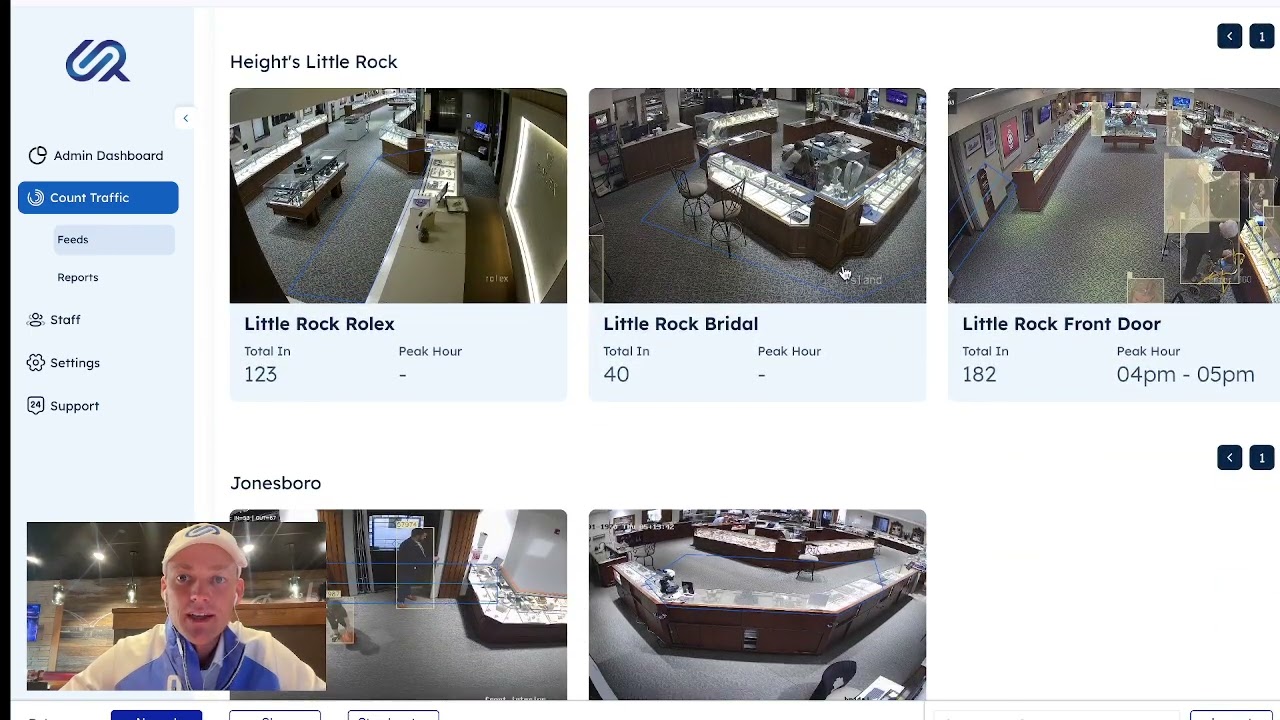
After more than two years of development, testing, and refinement, we’re proud to officially introduce CountRetail.ai — the most advanced traffic intelligence and retail analytics system ever built specifically for independent jewelry stores. And due to overwhelming demand, CountRetail will initially be available exclusively to JewelLink members, based on membership seniority. This is not just another reporting tool.This is a complete shift in how jewelers understand traffic, merchandising, marketing performance, and bridal conversion. Welcome to the next evolution of retail intelligence. 👉 Learn more at www.CountRetail.ai Why Jewelry Stores Need More Than POS Data Point-of-sale data tells you what already happened. But what about: The customers who walked in and didn’t buy? The engagement ring shoppers who visited your bridal case but never filled out a form? The traffic hitting one category but ignoring another? The marketing dollars that drove traffic but didn’t convert? Traditional POS systems can’t answer those questions. CountRetail.ai does. What Is CountRetail.ai ? CountRetail.ai is an AI-powered retail analytics system that uses your existing camera infrastructure to provide: Store entrance traffic metrics Zone-based traffic counting (case-level insights) Dwell time & average dwell time Defined traffic thresholds (e.g., 60-second engagement zones) Demographic estimates (age, gender trends) Marketing performance tracking Bridal traffic auditing Category-level engagement insights This isn’t just people counting. It’s zone intelligence. Zone-Based Traffic: “Batman-Level” Retail Insight For the first time, independent jewelers can measure traffic inside specific zones — not just at the front door. That means you can: Track traffic to your bridal case Measure engagement in designer showcases Compare engagement between categories Identify aged inventory that isn’t being shown Adjust merchandising based on real behavioral data Even more powerful? You can define what counts as traffic. For example, you can set a zone to only count a customer if they spend 60+ seconds in that area , ensuring you measure true engagement — not just walk-bys. That level of precision changes everything. Bridal Traffic Auditing: The Game Changer This may be the most powerful feature of all. For years, many retailers have assumed stalled bridal growth was due to sales associate training. But without traffic data, there was no way to verify that assumption CountRetail.ai changes that. Now you can: Measure bridal zone traffic Compare it to actual bridal intake forms Audit associate follow-through Analyze demand by shape (ovals vs rounds) Track top styles (solitaire, 3-stone, custom, etc.) Evaluate price point interest trends Instead of guessing why conversion is down, you’ll know. This bridges the gap between: Traffic → Engagement → Intake → Sale No more blind spots. Marketing Attribution Like Never Before CountRetail.ai includes a full marketing tracking suite that allows you to: Track marketing spend by category Measure resulting traffic increases Compare traffic performance by demographic shifts Identify which campaigns drive real store visits Now you can calculate: Marketing Spend Per VisitorMarketing Spend Per Category TrafficTraffic Lift Per Campaign That’s actionable ROI — not just impressions and clicks. Inventory Intelligence Through Behavior We’ve always believed:“If a piece is never shown, it’s never sold.” With zone-based traffic data, you can identify: Displays that attract attention Cases that get ignored Categories underperforming in engagement Inventory that needs repositioning We are also integrating category-level traffic with inventory and merchandising strategy to help stores make smarter buying decisions. This is data-driven retail at a completely new level. Built for JewelLink Members First Because of intense interest and demand, we are rolling this out in phases. Phase 1: CountRetail.ai will be available exclusively to JewelLink members, prioritized by seniority of membership. Why? Because onboarding matters.This system is powerful — and we want to ensure every store is properly set up for success. Phase 2: Once onboarding demand stabilizes, we will begin expanding availability to additional stores. If you are not yet a JewelLink member, now is the time. What Makes CountRetail Different? Most retail analytics tools: Count entrances Provide basic foot traffic Offer generic dashboards CountRetail.ai provides: ✔ Case-level zone intelligence✔ Defined engagement thresholds✔ Bridal auditing capabilities✔ Marketing performance tracking✔ Demographic trend insights✔ Inventory & merchandising data alignment This was built specifically for independent jewelry retailers — not adapted from big-box retail systems. Live Beta & National Rollout We are currently entering live beta testing with select stores. If you’re attending RGO in Phoenix, come see a live demo. We’d love to walk you through the dashboards and show you what’s possible. Over the coming months, we will carefully expand onboarding to additional stores. The Future of Independent Jewelry Retail For decades, jewelers have relied on: POS history Gut instinct Associate feedback Vendor recommendations Now you’ll have behavioral data. Real traffic.Real engagement.Real attribution.Real insight. CountRetail.ai doesn’t replace intuition —It validates it. Ready to Learn More? Visit:👉 www.CountRetail.ai Or contact JewelLink to see if your membership seniority qualifies you for early access. The future of jewelry retail analytics has arrived. And it starts with traffic.
- Understanding Traffic Flow in Retail: The Secret to Raising Your Jewelry Store’s Average Ticket
Every jeweler wants to raise their average ticket—but most focus on the wrong things.They focus on inventory.They focus on promotions.They focus on pricing. But the real driver of average ticket is something almost nobody talks about: Traffic Flow. How customers physically move through your store determines: What they see What they touch What they experience What they emotionally connect with And ultimately, what they buy Once you understand this, you unlock the formula for doubling (or tripling) your average ticket—without increasing your advertising spend. Let’s break down how it works. Sales = Traffic × Average Ticket These are the only two levers retailers have: 1. Traffic — How many customers enter the store This comes from marketing, location, events, and awareness. 2. Average Ticket — How much each customer spends This comes from: Inventory exposure Sales associate confidence Store layout Case flow Presentation Experience Traffic is difficult to change without major investment. Average ticket, however, can be changed dramatically—simply by changing sales behavior and customer movement. Why Average Ticket Is a Direct Reflection of Associate Confidence In jewelry retail: **Everything is locked. Customers cannot shop without a salesperson.** That means: Employees control the entire experience. And where a customer goes in your store depends entirely on the confidence, habits, and skill of the associate greeting them. This is where traffic flow becomes transformative. The Typical Jewelry Store Layout — And Why It Hurts Your Average Ticket Most jewelry stores are designed like this: Low-ticket silver near the entrance (for security reasons) Higher-end diamond fashion near the middle Bridal, loose diamonds, and high-ticket merchandise in the safest areas, toward the back This layout makes sense from a security standpoint… …but it creates a HUGE problem. If your associate is inexperienced or nervous, they will sell small items. Newer or lower-volume associates tend to: Feel uncomfortable during greetings “Hide” behind the first case they see Immediately show the closest piece of inventory Stay in the low-price zone because it feels safe And since those low-priced cases are closest to the front door, they become the default presentation area. This destroys your average ticket. A Real-World Example That Changed a Store Overnight In a live training session, William asked the staff: “If a customer walks in and asks for diamond studs, what do you all show first?” Everyone went to the $1,400 studs. William forced them to practice showing 2-carat diamond studs instead. They didn’t like it. They said: “We don’t sell those often.” “Customers won’t buy them.” “That’s too expensive to start with.” Then—like magic—a real customer walked in and said: “I need to look at diamond studs.” The associate (following the new rule) showed the 2-carat pair, and the customer said: “Great, I’ll take them.” The associate looked shocked.The whole team’s mindset changed instantly. This is the power of traffic flow and presentation strategy . Training Associates to Move Customers Through the Store If you want to raise average ticket: **Your associates must stop showing what’s near them… …and start showing what’s valuable.** You must train them to: 1. Give store tours Associates should not freeze at the front.They should guide customers deep into the store. 2. Move clockwise (or systematically) through the sales floor This ensures customers see high-ticket categories first. 3. Present high-value merchandise early If the customer isn’t a match, you can always step down.But stepping UP from silver to diamonds is nearly impossible. 4. View the store like a chessboard Where the customer moves determines what opportunities exist. 5. Treat the experience like fine dining, not fast food You are not “grabbing” items behind a counter.You are guiding a customer through a luxury experience. This simple shift can literally double your average ticket. Using CountRetail Vision AI to Reveal Hidden Traffic Patterns Most owners think they know: Where customers walk What cases get seen Which areas are “hot spots” How well associates guide traffic But they’re usually wrong. CountRetail Vision AI—JewelLink’s in-store traffic analytics system—shows the reality: Which zones customers go to How long they stay Which cases get ignored Where associates get “stuck” How layout affects revenue What areas produce the highest tickets When you finally SEE your store’s traffic flow on a heat map… …it becomes obvious why your average ticket is stuck. And more importantly—it becomes obvious how to fix it. The #1 Rule: Show Silver LAST, Not First The lowest-priced items should be: A fallback A backup A safety net Not the starting point. Once a customer’s FIRST impression is silver, it becomes VERY hard to move them to diamonds. You must start them deeper in the store—where your value lives. A Small Change That Completely Changes Your Sales Floor If your store wants to raise its average ticket: Train associates to guide customers into the diamond, bridal, and fashion zones FIRST—not the front cases. This one modification: Raises average ticket Reduces aged inventory Improves brand perception Elevates customer experience Improves associate confidence Leads to more diamond presentations Drives higher-margin sales It’s one of the simplest but most powerful tools in the entire Jewelry Sales Academy system. Want to Transform Your Store’s Average Ticket? JewelLink Can Help. Between: Jewelry Sales Academy training AI customer role-play modules CountRetail Vision AI analytics Clienteling tools CRM Appointment management Staff development systems …we help jewelers increase: Sales Average tickets Conversion Traffic quality Staff confidence —without increasing marketing spend. 📈 Learn more at www.jewellink.com 💎 Raise your average ticket by changing how customers move through your store.
- Managing Sales to Salaries: The Most Important Metric for Scaling a Jewelry Store
One of the most common questions we hear from store owners and managers is: **“What should my sales-to-salaries percentage be?” “How many salespeople should I have?”“How do I scale my store without losing profit?”** These questions all point to the same core issue: Understanding and managing your Sales-to-Salaries Ratio. This single metric determines: How profitable your store is How fast you can grow How many people you can afford to hire How many sales associates you need When you’re ready to add your next salesperson How to predict your next revenue level Today, we’re breaking it down in a simple, no-nonsense way. What Is the Sales-to-Salaries Ratio? It’s simple: Total Annual Salaries ÷ Total Annual Revenue This gives you a percentage that reflects how much of your revenue is spent on your team. A few general guidelines: Smaller stores (~$1M–$2M revenue) have higher percentages Stores in the $3M–$5M range shrink that percentage Larger stores spread salaries across more revenue and have lower percentages In short: The more revenue you generate, the lower your sales-to-salaries ratio—and the more scalable your staffing becomes. A Typical Breakdown of Store Staffing Costs Here’s a simplified example from the video: Management: ~3% Sales Floor: ~7–8% Office + Jewelers (Support): ~5% Total: ~15% Sales-to-Salaries Every store is different, but the pattern stays consistent. Why Sales-to-Salaries Determines Your Growth Ceiling Jewelry sales is relationship-based. A strong associate can realistically manage: 50 meaningful client relationships per year. Those 50 customers often produce 80%+ of their revenue. So, imagine a store with: 4 associates Each capable of maintaining ~50 strong clients You now have: 200 total high-value relationships to base your annual revenue on. This becomes your ceiling. If the store is doing $1 million in revenue, those 200 relationships may support that—but not much more. You can increase: Average ticket Transaction count Clienteling efforts …but only marginally. Eventually the store hits a plateau . The Only Reliable Way to Break That Plateau You must add: A fifth associate. A new associate means: 50 more relationships 50 more opportunities A larger client base More support for walk-in traffic And an expanded revenue ceiling This is how stores go from: $1M → $1.3M → $1.5M → $2M → $3M and beyond. It’s not magic. It’s math + capacity + client relationships . Why Most Stores Get Stuck Because their low producers drain the sales-to-salaries ratio. Let’s break down a typical floor: Two Top Performers (50/50) Their salaries-to-sales might be 7% combined. Two Low Performers (25/25) Their salaries-to-sales might be 15% combined. Together they average around 10% , which feels normal. But here’s the real problem: Low performers push the ratio UP. Top performers push the ratio DOWN. And most stores end up stuck because: Two people carry the floor Two people hold the floor back There’s no room to hire another associate Sales plateau This is a sales-to-salaries issue—not a staffing issue. How to Build Pay Structures That Scale Your Team Let’s simplify this with an example: A new associate starts with a salary. At low revenue, their ratio might be: 15% of their sales. But as they grow: At $500K → maybe 15% At $750K → maybe 12% At $1M → maybe 7–8% At $1.5M → maybe 6% What happens when they reach that 6% range? They LOWER your overall sales-to-salaries ratio enough to… Hire another associate. And the cycle repeats. This is the formula for scaling from: 4 → 5 → 6 → 8 → 10+ associateswhile staying profitable. Scaling a Jewelry Store Is a Recruiting & Training Business Here’s the truth about running a jewelry store: **You’re not just in sales. You are in recruiting and training.** Because the only way to scale is to: Recruit new associates Train them effectively Build their book of 50 customers Lower their sales-to-salaries ratio Use the margin to hire the next associate Repeat This is how the biggest independent jewelers scale their floors. How to Begin Using This in Your Store Today Calculate your store’s sales-to-salaries ratio Total annual salaries ÷ total annual revenue. Break the ratio down by individual associate Identify: Who drives the percentage down Who drives it up Who has capacity Who is maxed out Identify your next revenue ceiling Based on your total relationship capacity. Decide when to add your next associate Use the ratio to guide timing. Build a pay structure that rewards growth High producers shrink their ratio → expanding your hiring ability. If You Still Feel Stuck, JewelLink & the Academy Can Help The Jewelry Sales Academy and JewelLink were built to solve exactly this problem by giving stores tools for: Training new associates Tracking performance Clienteling Appointment setting Messaging AI sales training Traffic analytics Hiring & aptitude testing Management dashboards Your staffing model becomes predictable, scalable, and strategic—not reactive. Ready to Build a Scalable, Profitable Sales Floor? If you want to: Lower your sales-to-salaries ratio Add more associates Break through revenue ceilings Grow sustainably Train faster And create a predictable scaling model We can help. 📩 Learn more at www.jewellink.com 🚀 Build a team structure that grows with your revenue